
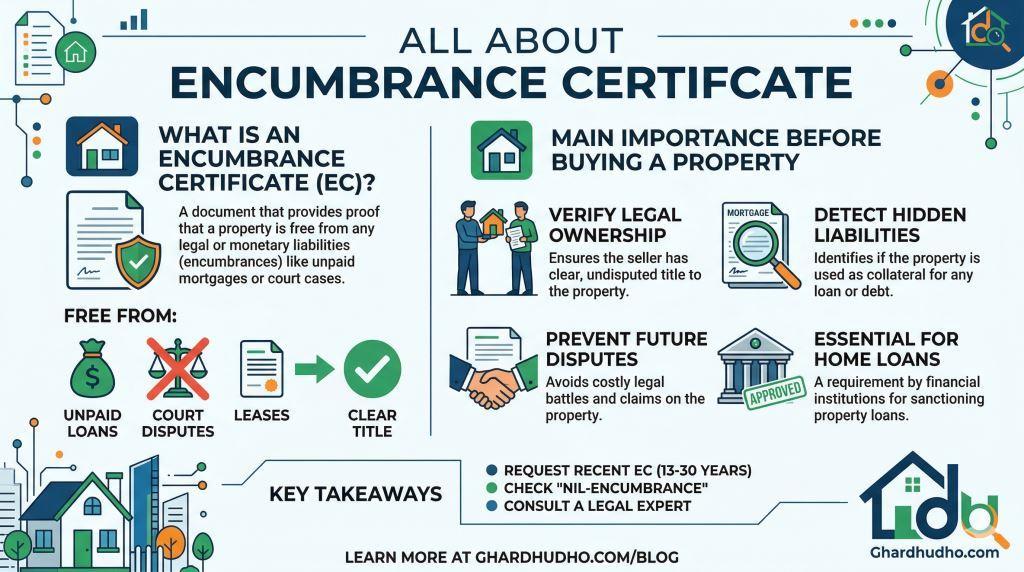
An Encumbrance Certificate (EC) is a vital legal document that serves as proof of free title and ownership for a property. In the real estate industry, "encumbrance" refers to any legal or financial liability or charge on the property, such as an unpaid mortgage, a loan taken against it, or a pending court dispute.
Think of the EC as a "medical report" for the property's health—it tells you exactly what has happened to that piece of land or building over a specific period (usually the last 13 to 30 years).
⚖️ Why is it Crucial Before Buying?
Skipping an EC check is one of the riskiest moves a buyer can make. Here is why it is considered the "gold standard" for due diligence:
1. Verification of Clear Title : The EC ensures that the person selling the property actually has the legal right to do so. It lists the chain of ownership, helping you verify that there are no "hidden" co-owners or legal heirs who could claim the property later.
2. Detection of Financial Liabilities : If the current owner has taken a home loan or used the property as collateral (mortgage), it must be registered with the Sub-Registrar. The EC will display these entries. If you buy a property with an active mortgage, you might inherit the debt.
3. Protection Against Fraud : The EC helps prevent "double sales," where a fraudulent seller might try to sell the same property to two different buyers. Any previously registered sale deed will appear in the certificate.
4. Mandatory for Bank Loans : If you are planning to take a home loan, no bank or financial institution will sanction it without a clear EC for at least the last 13 to 15 years. Lenders use it to ensure the asset they are financing is risk-free.
📄 Understanding the Two Forms
When you apply for an EC at the Sub-Registrar's office (SRO), you will receive one of two forms:
| Feature | Form 15 (Encumbrance) | Form 16 (Nil-Encumbrance) |
| Status | The property has registered transactions. | The property is transaction-free. |
| Details | Lists sales, mortgages, gifts, or leases recorded during the period. | States that no transactions were found for the period. |
| Buyer's View | Review carefully to see if loans were closed (Release Deed). | Generally considered "clean," but still verify with a lawyer. |
💡 Key Tips for Real Estate Professionals
- Period of Search: Always recommend a 30-year search for total peace of mind. While 13 years is common, a 30-year history captures older mortgages that might still be active.
- Check for "Release Deeds": If the EC shows a mortgage, look for a subsequent "Release Deed" entry. This proves the loan was fully paid off.
- Offline vs. Online: While many states like Uttar Pradesh offer online EC views, a certified physical copy from the SRO is always preferred for final legal closures.


Leave a Comment