
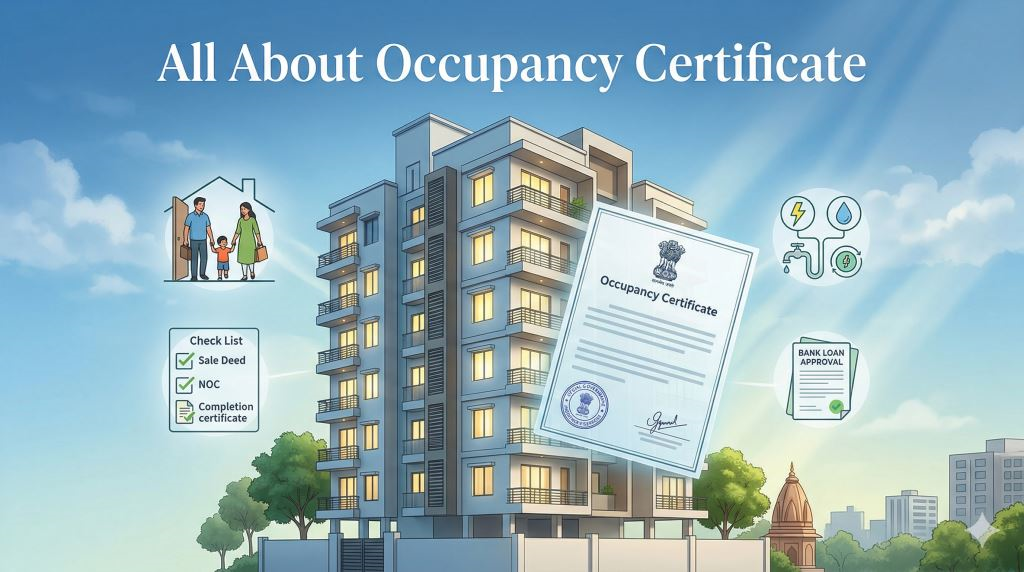
An Occupancy Certificate (OC) is a vital legal document issued by a local civic body or planning authority (such as a municipal corporation) certifying that a newly constructed building is fit for habitation. It confirms that the building has been constructed according to the approved plans and complies with all local laws and safety regulations.
Importance of an Occupancy Certificate
The OC is arguably the most important document in real estate transactions. Without it, a building is technically considered "unauthorized."
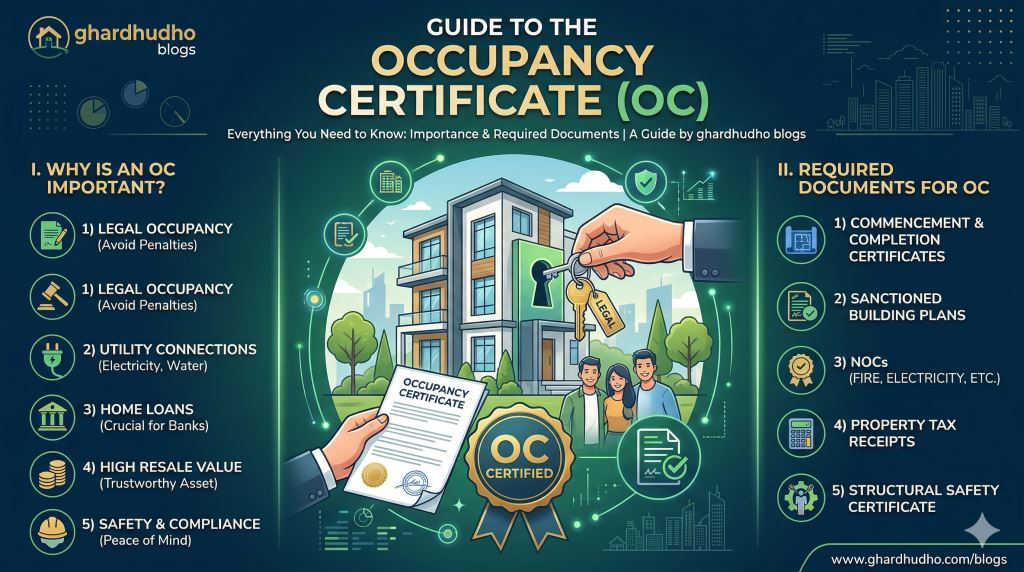
- Legal Occupation: It is the only document that legally allows you to move into your new home or commercial space.
- Access to Utilities: Most utility providers require an OC to grant permanent connections for electricity, water, and sanitation.
- Home Loans: Banks and financial institutions generally will not provide home loans for properties that lack an OC.
- Resale Value: Selling a property without an OC is extremely difficult, as it raises red flags regarding the legality of the structure.
- Legal Protection: It ensures that the developer has followed all building codes, including fire safety and structural norms, protecting you from future demolition notices or penalties.
Documents Required to Obtain an OC
While specific requirements vary by state and local authority, the following documents are standard:
1. Project Clearances
- Commencement Certificate: The initial permit that allowed construction to start.
- Completion Certificate (CC): Issued by the architect/engineer stating the work is finished.
- Sanctioned Plan: The original building blueprints approved by the authority.
2. No Objection Certificates (NOCs)
- Fire Department NOC: Confirming fire safety measures are in place.
- Pollution Control Board NOC: For environmental compliance (usually for larger projects).
- Lift Safety Certificate: If the building has elevators.
- Electrical Inspectorate Approval: For the building’s wiring and transformer setup.
3. Ownership and Tax Records
- Property Tax Receipts: Proof that all latest taxes have been paid.
- Copy of the Sale Deed: To prove ownership of the land/property.
4. Technical Reports
- Structural Safety Certificate: Signed by a certified structural engineer.
- Photographs: Of the completed building (exterior and interior).
- Area Calculation Sheet: Signed by the architect to verify the built-up area matches the approved plan.
Note: If you are buying a property, never settle for just a Possession Letter. A possession letter is from the builder, but the Occupancy Certificate is from the government. Always insist on seeing the OC before taking final possession.

Leave a Comment