
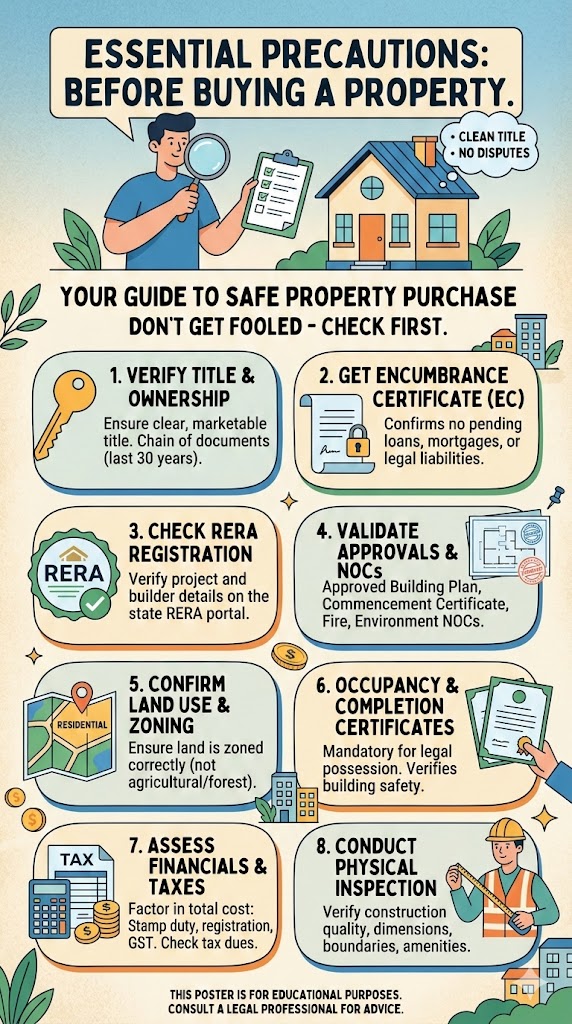
Buying a property is one of the most significant financial decisions you will ever make. Whether you’re purchasing your first apartment, upgrading to a larger home, or investing in real estate, careful planning and due diligence are essential. Rushing into a deal without proper checks can lead to legal disputes, financial strain, or long-term regret.
Here is a detailed guide on the key precautions you should take before buying a property.
1. Verify the Legal Title of the Property
The first and most important step is to ensure that the seller has a clear and marketable title.
- Confirm that the seller is the legal owner.
- Check that the property is free from disputes, claims, or encumbrances.
- Request copies of the title deed and past ownership records (at least 10–15 years).
- Verify that the property is not mortgaged, or obtain a no-objection certificate (NOC) from the lender if it is.
Hiring a qualified property lawyer to conduct due diligence is highly recommended.
2. Check Zoning and Land Use Regulations
Before buying, ensure the property complies with local zoning laws and development regulations.
- Confirm that the property is approved for residential use (if buying a home).
- Check building approvals and permits from local authorities.
- Verify that there are no violations or unauthorized constructions.
If you’re buying in a large city such as New York City or London, zoning laws can be complex, and consulting a local expert is crucial.
3. Assess the Location Carefully
Location significantly affects both quality of life and property value.
Consider:
- Proximity to schools, hospitals, workplaces, and public transport
- Safety and crime rates
- Infrastructure development plans
- Future growth prospects
For example, properties near major commercial hubs like Dubai often appreciate faster due to ongoing development and demand.
4. Inspect the Physical Condition
Never rely solely on photographs or verbal assurances.
- Conduct a thorough site visit.
- Check for structural cracks, water leakage, dampness, plumbing and electrical issues.
- Inspect roofing, flooring, windows, and ventilation.
- If possible, hire a professional home inspector.
For apartments, also check common areas, elevators, parking spaces, and security systems.
5. Understand the Total Cost Involved
The purchase price is not the only expense. Account for:
- Registration and stamp duty
- Legal fees
- Brokerage fees
- Maintenance charges
- Property taxes
- Renovation costs (if needed)
If you are financing the property through a mortgage, compare interest rates from different banks and understand loan terms clearly.
6. Review Builder or Developer Reputation (For New Projects)
If buying from a developer, research their track record.
- Check past projects and delivery timelines.
- Read customer reviews.
- Verify approvals from regulatory authorities.
- Ensure there are no ongoing legal cases against the builder.
A reputed developer reduces the risk of delays and legal complications.
7. Check Utility and Infrastructure Availability
Ensure basic utilities are properly connected:
- Water supply
- Electricity
- Sewage system
- Internet connectivity
Also confirm road access and drainage systems, especially for independent houses or properties in developing areas.
8. Evaluate Resale and Rental Potential
Even if you are buying for personal use, consider future resale value.
- Is the area growing?
- Are rental yields strong?
- Is there demand for similar properties?
Properties in rapidly developing areas or near employment hubs tend to have better long-term appreciation.
9. Verify Society or Association Rules (For Apartments)
If the property is part of a housing society or condominium:
- Review maintenance fees.
- Understand rules on renovations, pets, and rentals.
- Check if there are any pending dues on the property.
Unpaid maintenance charges by the previous owner can sometimes transfer to the new buyer.
10. Ensure Proper Documentation Before Final Payment
Before making the final payment:
- Confirm that the sale agreement is correctly drafted.
- Verify all annexures and property details.
- Ensure possession timelines are clearly stated.
- Register the property as per local laws.
Never rely on verbal promises; everything must be documented in writing.
11. Consider Future Development Plans
Research upcoming infrastructure projects like:
- Highways
- Metro lines
- Commercial centers
- Schools and hospitals
Planned developments can significantly increase property value, but also check for potential negatives like proposed industrial zones nearby.
12. Avoid Emotional Decisions
Buying property is emotional, especially when it feels like your “dream home.” However:
- Compare multiple options.
- Do not rush due to pressure from sellers.
- Negotiate price and terms.
- Make decisions based on financial capacity, not impulse.
Final Thoughts
Buying property requires patience, research, and professional guidance. Legal verification, financial planning, and physical inspection are non-negotiable steps. Taking these precautions can protect you from costly mistakes and ensure that your investment is secure and rewarding in the long run.
If you approach the process systematically and cautiously, your property purchase can become a stable asset and a foundation for long-term financial growth.


Leave a Comment