
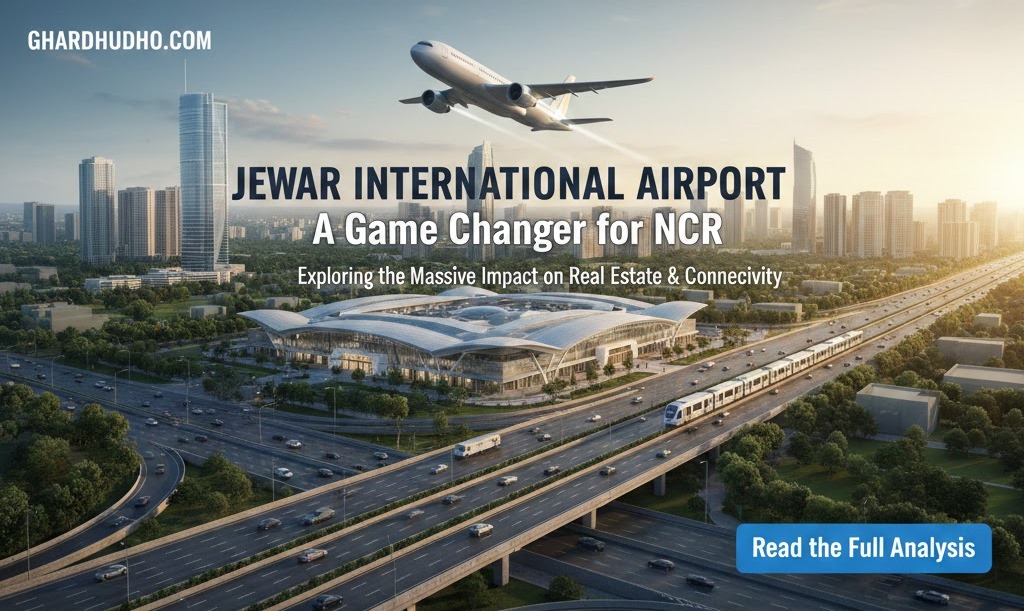
Jewar International Airport (officially Noida International Airport) is a major greenfield aviation project being developed in Jawar–Tappal area, Greater Noida (Gautam Buddh Nagar), Uttar Pradesh. It is planned to be one of India’s largest airports, designed to ease traffic from Indira Gandhi International Airport and become a major international gateway for North India.
🌏 Key Features
- Designed to handle millions of passengers annually with scalable future expansion.
- Close connectivity to Delhi, Greater Noida, Yamuna Expressway, and major highways.
- Includes cargo facilities, helping boost logistics and export-import activities.
- Proposal for rapid transit systems (RRTS) and metro links to Delhi and Noida.
- Once operational, Jewar Airport is expected to transform not just aviation connectivity but also regional economic growth for Uttar Pradesh and the NCR (National Capital Region).
See More : Top Real Estate Investment Hotspots Near Jewar Airport | Lal Dora Plots In Delhi NCR | Mumbai 3 States : New Era of Development | Essential Precautions : Before Buying A Property | प्रॉपर्टी खरीदते समय कौन कौन सी सावधानियां रखनी चाहिए
🏗️ Major Government & Private Development Initiatives Around Jewar Airport
🚧 Government-Led Infrastructure Projects
| 1. Regional Connectivity & Transit Projects |
|
| 2. Industrial & Economic Zones (YEIDA Plan) |
|
| 3. Cargo & Ancillary Services |
|
| 4. Multimodal Growth Initiatives | Plans for Film City, entertainment hubs, hospitality zones, and recreation parks to complement economic zones. |
| 📌 MoUs worth over ₹19,000 crore have been signed for developments like international theme townships, hyperscale data centres, logistics parks, and renewable energy projects in the larger NCR region linked to airport growth. | |
YEIDA Approved Township | YEIDA Approved | YEIDA 7% Kisan Quota Plots | 7% Farmer Plots YEIDA Kisan Quota Plots On Yamuna Expressway | YEIDA Approved Residential Plot For Sale Near Jewar Airport | YEIDA Approved Township | YEIDA Approved Plot For Sale On Yamuna Expressway
🌆 Real Estate Development Around Jewar Airport
The announcement and progress of Jewar Airport have sparked one of the biggest real estate booms in the NCR, reshaping markets in Greater Noida, Yamuna Expressway, Dankaur, Tappal and surrounding villages.
| 📈 Impact on Property Values |
|
| 🏡 Residential Growth |
|
| 🏢 Commercial & Industrial Real Estate |
|
📊 Why Jewar Airport Is a Catalyst for Urban Transformation
| 🔗 1. Connectivity Enhancement | The airport enhances connectivity across NCR, linking major economic hubs via expressways, metro, and rapid transit — dramatically reducing travel times and making peripheral regions much more accessible. |
| 💼 2. Employment & Economic Activity | Growth in aviation, logistics, hospitality, manufacturing, and services sectors is expected to generate hundreds of thousands of jobs, leading to demand for housing, retail, and office markets. |
| 🏙️ 3. Urbanization & Lifestyle Infrastructure | As residential and commercial zones grow, social infrastructure — schools, hospitals, malls, community centres — is expanding, improving quality of life for local communities. |
| 🏡 4. Rise of New Urban Hubs | Areas around Jewar are becoming self-sustained urban corridors rather than just airport suburbs — attracting investors, corporates, and residents seeking opportunities outside Delhi/Gurugram. |
📌 Summary: Real Estate & Regional Development Impact
- Area Expected Impact
- Land Value Higher valuations, long-term appreciation
- Residential Market Booming townships, plots, housing demand
- Commercial Space Growing office, retail & logistics hubs
- Industrial Growth Electronics, MSMEs, data centers & manufacturing
- Job Creation Large-scale employment opportunities
- Infrastructure Better connectivity, transit systems, utilities
📍 Conclusion
Jewar International Airport isn’t just an aviation project — it’s a transformative economic engine for Uttar Pradesh and the NCR. From enhancing connectivity to triggering real estate growth, fueling jobs, and urban infrastructure, the airport’s influence extends far beyond its runways. Early investors and businesses positioned themselves strategically around the airport corridor are likely to benefit from sustained appreciation and progressive development over the next decade.


Leave a Comment